
Si Kecil Mulai Makan? Ini 5 Tahapan Tekstur MPASI yang Benar
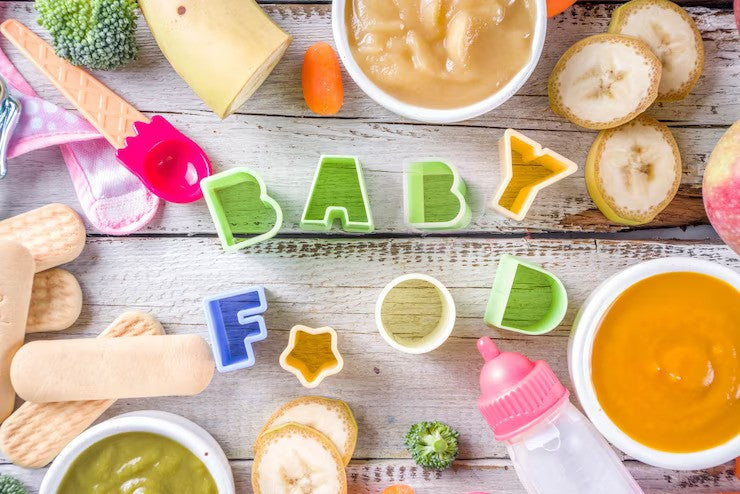
At 6 months old, babies start to be introduced to MPASI, which stands for Makanan Pendamping Air Susu Ibu (Complementary Foods for Breast Milk). This is because as a baby grows older, the nutrients they require also increase. Breast milk alone will not be enough to meet the little one's nutritional needs once they reach 6 months of age. Therefore, the introduction of MPASI is expected to increase nutritional intake appropriately according to the child's age. One thing that you, as a mother, need to pay attention to is the texture of the MPASI to be given.
Usually, MPASI begins with the smoothest texture, such as puree or porridge. Then, as the baby grows older, the texture of MPASI can be increased gradually to be coarser/thicker. For more details, you can follow the guidelines for providing baby MPASI texture according to their age stage below.
Stages of MPASI Texture according to Baby's Age

The provision of MPASI texture for babies is divided into 5 age stages, namely at 6 months, 7 to 8 months, 9 to 10 months, 11 months, and 1 year. A more complete explanation can be seen in the review below.
1. 6 months
6 months of age is the start of MPASI for babies. After 6 months of only consuming breast milk, this age is an important period for your little one to eat nutritious complementary foods.
At the beginning of MPASI, the texture must be smooth/semi-liquid so that the little one can easily adapt. Usually, the MPASI provided is in the form of puree or porridge with a gradual frequency and portion.
Examples of MPASI menus that you can give include avocado puree, potato carrot puree, pumpkin soup, and banana. You can provide an MPASI menu 1-2 times a day in portions of 2-3 tablespoons and increase the amount gradually according to your little one's ability.
2. 7 - 8 months
Entering the age of 7 to 8 months, you can start increasing the MPASI texture to be slightly coarser. If previously the food processing was done by straining, at this age stage, it is no longer necessary. You simply need to blend the food until you get a slightly smooth texture without needing to strain it.
Add breast milk to the complementary food that will be given so that the texture becomes smoother. At first, the baby might refuse, but do this slowly until your little one finally gets used to it.
3. 9 - 10 months
Entering 9 months of age, you can start introducing unstrained porridge, thick porridge (nasi tim), and finger food to your little one. At this stage, the baby begins to learn to consume foods that are denser than before.
Besides the increased texture, the portion of food given is also larger with a frequency of 3 to 4 times a day. Don't forget to also provide snacks 1 to 2 times as a supplement.
9 months of age is also the right time to introduce finger food to your little one. In addition to eating food with a denser texture, the little one also learns to eat by themselves, practices fine motor skills, and improves biting and chewing abilities.
Examples of finger food that you can give include fruit and vegetable slices, cheese, eggs, tofu, and others. Always ensure you supervise your little one when trying finger food to minimize the possibility of choking.
4. 11 months old
You can schedule the provision of nasi tim at this age. This is also accompanied by an increase in food portion to 250 ml with a frequency of 3 to 4 times per day.
Also add side dishes and vegetables to the nasi tim menu as well as snacks in between meal times.
5. 1 year
Entering 12 months or 1 year of age, children are generally ready to consume adult food. However, it is better to avoid including seasoning like pepper and chili in your little one's MPASI menu.
So, to reach this final stage, your little one must certainly be able to go through various MPASI textures according to their age. Therefore, you should strive for the MPASI process based on the food texture guidelines according to the age described above!

In addition to understanding the stages of MPASI texture, at 6 months old, babies can also be introduced to drinking using a straw. To make it easier for your little one, you can provide a drinking bottle with a straw cup.
One of the best recommendations you can choose is the HEGEN PCTO™ 330ML/11OZ STRAW CUP PPSU which is available in 3 color options: grey, blue, and pink. The straw cup drinking bottle from Hegen is made from the best PPSU material that is lightweight, durable, heat-resistant from -20 degrees Celsius to 180 degrees Celsius, FDA certified, and BPA free.
Not only that, the cap or cup part of the Hegen drinking bottle also uses PCTOTM innovation which allows parents and caregivers to close the bottle conveniently with just one hand without worrying about spills, while the other hand remains free to hold the little one.
What are you waiting for? Always give the best to your little one by trusting straw cup drinking bottles and other mother and baby needs only from Hegen by clicking here.
References:
- Vincent Iannelli, MD. Making Sense of 'Stages' and 'Steps' on Baby Food Labels. https://www.verywellfamily.com/baby-food-stages-and-steps-2634465
- Nationwide Children’s. Feeding Guide for the First Year. https://www.nationwidechildrens.org/conditions/health-library/feeding-guide-for-the-first-year


