
Berapa Suhu Tubuh Normal Bayi? Cek Informasinya di Sini!
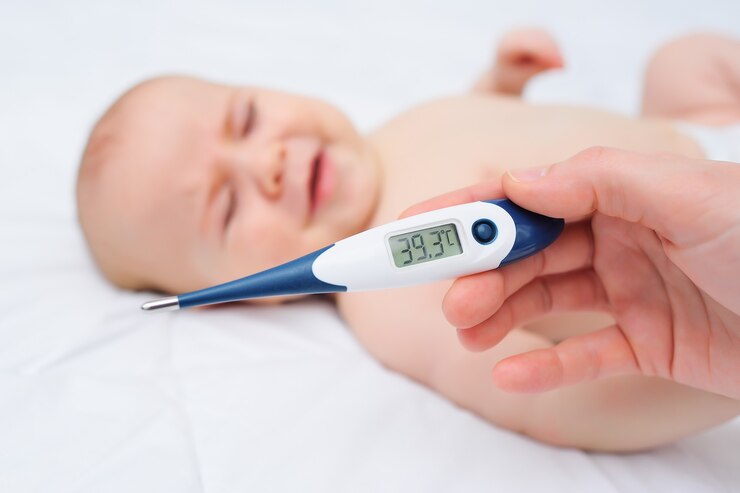
Understanding a baby's normal body temperature is very important for new parents because it is an indicator of the baby's health. Normal body temperature generally ranges between 36.5°C and 37.5°C, slightly higher than the normal adult temperature which is around 36.1°C to 37.2°C. Babies are more susceptible to changes in ambient temperature because their body temperature regulation system is not yet fully developed.
Several factors that influence a baby's body temperature include the surrounding environment's temperature, physical activity, clothing worn, and the baby's health condition. Monitoring a baby's body temperature regularly helps parents detect potential health problems early. Come on, Moms, check out the complete guide in the following article.
Normal Body Temperature for Babies
Speaking of a baby's normal body temperature, Moms need to know that this can change as the baby grows. The following will specifically explain the normal body temperature for children for you, Moms.
- Newborn: 36.5°C to 37.5°C. Newborns have an immature temperature regulation system, making them susceptible to changes in environmental temperature.
- 3-6 months: 36.5°C to 37.5°C. At this age, the thermoregulation system begins to develop, but the baby is still sensitive to temperature changes.
- 6-12 months: 36.5°C to 37.5°C. The temperature regulation system is more mature, and the baby begins to adapt better to the environment.
- 1-3 years: 36.1°C to 37.4°C. At this age, the body temperature range begins to approach normal adult body temperature, but the child is still more sensitive than an adult.
Moms also need to know that a baby's body temperature is slightly higher than an adult's. Normal adult temperature ranges from 36.1°C to 37.2°C, while babies usually range from 36.5°C to 37.5°C. Babies tend to experience body temperature fluctuations more easily because their metabolism is more active and their body temperature regulation system is not fully developed.
A baby's body temperature can also fluctuate slightly throughout the day, influenced by activity, eating, or sleeping. In the morning, body temperature is usually lower and will increase in the afternoon or evening. However, these fluctuations are usually within the normal range and are not a sign of a health problem in the baby, unless accompanied by other symptoms such as fever or chills.
Read also: 4 Signs Your Baby is Teething That Moms Must Understand
Factors Influencing a Baby's Body Temperature

Source: freepik
As previously explained, a baby's normal body temperature is influenced by several factors such as age, activity, time, clothing, the baby's health condition, and their environmental circumstances. You can see the explanation below, Moms.
- Age: Younger babies tend to have a higher body temperature compared to older children. This is caused by a more active metabolism and an immature temperature regulation system.
- Activity: Physical activities such as crying, moving, or playing can temporarily increase a baby's body temperature.
- Time: A baby's body temperature tends to be lower in the morning and slightly higher in the afternoon to evening. This is part of the baby's body's circadian rhythm.
- Clothing: Wearing clothes that are too thick or layered can cause the baby to overheat, thus increasing their body temperature.
- Environment: A room temperature that is too hot or too cold can affect the baby's body temperature. Babies cannot regulate their body temperature as well as adults, so they are more sensitive to changes in the ambient temperature.
- Health: Infections or diseases, such as the flu or respiratory tract infections, can cause fever in babies, which is a sign that the body is fighting an infection.
Read also: 3 Main Causes of White Tongue in Babies and How to Treat It
How to Measure a Baby's Body Temperature

Source: freepik/bookzv
Measuring a baby's body temperature can be done using several methods. Here is a brief explanation of each method.
1. Rectal (Anus)
- Method: The thermometer is inserted into the rectum (anus) about 1.3-2.5 cm.
- Accuracy: This method is the most accurate for measuring a baby's core body temperature, especially for newborns or very young babies.
- Advantages: Very accurate and recommended by many doctors, especially if there are concerns about fever.
- Disadvantages: May be uncomfortable for the baby, and parents need to be careful when doing it to prevent injury.
2. Oral (Mouth)
- Method: The thermometer is placed under the baby's tongue.
- Accuracy: Generally accurate, but not recommended for babies younger than 4 years old because it is difficult to keep the baby still with a thermometer in their mouth.
- Advantages: Easy to do on older children.
- Disadvantages: Not recommended for babies and toddlers, and the results can be affected by food or drinks consumed beforehand.
3. Armpit
- Method: The thermometer is placed under the baby's armpit, touching the skin.
- Accuracy: Less accurate than the rectal method, but sufficient for initial screening.
- Advantages: This method is safe and non-invasive.
- Disadvantages: The results may be lower than the core body temperature, so it is less accurate for detecting fever.
4. Ear
- Method: An infrared thermometer is inserted into the baby's ear canal to measure the temperature from the eardrum.
- Accuracy: Fairly accurate if done correctly, but not recommended for babies under 6 months old due to their small ear size.
- Advantages: Fast and convenient.
- Disadvantages: Requires correct technique and special tools, and can be affected by earwax or incorrect positioning.
5. Forehead
- Method: A forehead or temporal thermometer uses an infrared sensor to measure the temperature from the artery in the forehead.
- Accuracy: Fairly accurate, especially for older babies.
- Advantages: Very fast, convenient, and non-invasive.
- Disadvantages: Can be affected by environmental factors such as room temperature.
Read also: Extraordinary, 10 Diseases That Can Be Prevented with Exclusive Breastfeeding
When Should Moms Be Worried?
It was previously mentioned that a baby's normal body temperature is usually between 36.5°C and 37.5°C. If the baby's thermometer shows a number exceeding this normal temperature, the little one might be having a fever.
Generally, fever can be treated by intensive breastfeeding to the baby to prevent dehydration. However, there are certain health conditions that Moms need to watch out for and should immediately consult with a doctor. Here is the review.
- Babies under 3 months: If the rectal temperature reaches 38°C or higher, contact a doctor immediately, because a fever in a very young baby can be a sign of a serious infection.
- Babies 3-6 months: If the body temperature reaches 39°C or higher, or if the baby seems very weak, fussy, or does not want to eat.
- Babies over 6 months: Contact a doctor if the fever reaches 39.4°C or higher, lasts more than 24 hours, or is accompanied by vomiting, diarrhea, rashes, or signs of dehydration such as reduced urination.
Baca juga: Dot Bayi Anti Kolik, Cegah Infeksi Telinga pada Bayi
Tips Menurunkan Demam pada Bayi secara Alami

Sumber: freepik
Demam pada bayi tidak selalu harus dikonsultasikan ke dokter. Apabila demam tidak disertai gejala-gejala lain seperti yang telah dijelaskan di atas, Bunda bisa mengupayakan cara-cara alami berikut untuk mengatasinya.
- Kompres air hangat: Gunakan kain yang dibasahi air hangat, lalu kompreskan pada dahi, leher, atau ketiak bayi.
- Berikan cairan yang cukup: Pastikan bayi mendapatkan ASI untuk mencegah dehidrasi.
- Pakaian tipis: Pakaikan bayi pakaian yang ringan dan nyaman untuk membantu pelepasan panas dari tubuh.
- Mandikan dengan air suam-suam kuku: Mandikan bayi dengan air hangat (bukan air dingin) untuk menurunkan suhu secara bertahap.
- Jaga suhu ruangan: Pastikan suhu ruangan nyaman dan tidak terlalu panas.
Penggunaan Produk Hegen Meminimalisir Risiko Demam pada Bayi

Produk Hegen dikenal karena desainnya yang inovatif dan berfokus pada kenyamanan serta kesehatan bayi. Meskipun tidak ada produk yang secara langsung dapat mencegah demam, penggunaan produk Hegen dapat membantu meminimalisir beberapa faktor risiko yang berkontribusi terhadap kondisi kesehatan bayi, termasuk demam.
Berikut adalah penjelasan tentang bagaimana penggunaan produk Hegen dapat berperan dalam meminimalisir risiko demam pada bayi.
- Desain Anti-Kolik
Botol susu Hegen dirancang dengan sistem ventilasi anti-kolik yang membantu mengurangi jumlah udara yang tertelan oleh bayi saat menyusu. Mengurangi asupan udara ini dapat mengurangi risiko kolik, yang sering kali menyebabkan ketidaknyamanan dan dapat memicu gejala yang mirip dengan demam, seperti rewel atau susah tidur.
Dengan meminimalisir kolik, bayi dapat lebih tenang dan nyaman, yang mendukung kesehatan mereka secara keseluruhan.
- Material yang Aman dan Bebas Toksin
Produk Hegen dibuat dari bahan PPSU (polyphenylsulfone) yang bebas BPA, BPS, dan PVC, sehingga menjamin tidak ada kandungan zat kimia berbahaya yang terlepas ke dalam susu atau makanan bayi.
Penggunaan material yang aman ini meminimalisir risiko paparan toksin yang bisa berdampak buruk pada sistem kekebalan tubuh bayi. Dengan demikian, hal ini dapat mengurangi kemungkinan bayi mengalami kondisi yang dapat memicu demam.
- Kemudahan Pembersihan
Desain botol Hegen yang sederhana dan mudah dibersihkan memastikan bahwa botol serta aksesori lainnya dapat dibersihkan secara menyeluruh. Pembersihan yang baik sangat penting untuk mencegah pertumbuhan bakteri atau kuman pada botol susu atau wadah makanan, yang bisa menyebabkan infeksi dan akhirnya demam. Dengan menjaga kebersihan yang optimal, risiko infeksi dapat diminimalisir.
- Desain yang Mengurangi Risiko Tumpah dan Kontaminasi
Botol Hegen dilengkapi dengan sistem "press-to-close, twist-to-open" yang memastikan bahwa botol tertutup rapat dan mencegah tumpahan atau kontaminasi dari luar. Makanan atau susu yang terkontaminasi dapat menjadi sumber infeksi yang memicu demam pada bayi. Dengan mencegah tumpahan dan kontaminasi, Hegen membantu menjaga kebersihan dan keamanan makanan yang dikonsumsi bayi.
- Fungsi Serbaguna dan Penyimpanan yang Aman
Botol dan wadah Hegen dapat digunakan untuk menyimpan ASI, makanan bayi, atau cairan lainnya dengan aman. Penyimpanan yang tepat adalah kunci untuk menjaga kesegaran dan mencegah pertumbuhan bakteri pada makanan atau susu yang disimpan.
Penyimpanan yang buruk bisa menyebabkan keracunan makanan atau infeksi yang berpotensi memicu demam. Dengan fungsi serbaguna dan penyimpanan yang aman, produk Hegen membantu memastikan bahwa bayi hanya mengonsumsi makanan atau susu yang aman dan sehat.
Penggunaan produk Hegen, meskipun tidak secara langsung mencegah demam, dapat meminimalisir risiko-risiko yang berkontribusi terhadap kesehatan bayi yang kurang optimal.
Desain yang ergonomis, material yang aman, kemudahan pembersihan, dan fitur anti-kolik semuanya bekerja bersama untuk mendukung kesehatan bayi secara keseluruhan, membantu mengurangi risiko kondisi yang bisa memicu demam.
Sebagai bagian dari perawatan yang lebih luas, penggunaan produk yang aman dan berkualitas seperti Hegen dapat menjadi langkah proaktif dalam menjaga kesehatan bayi. Bunda bisa mendapatkan berbagai produk perlengkapan ibu dan bayi dari Hegen seperti feeding bottle, drinking bottle, straw cup, breastmilk storage, breast pump, bottle and teat cleaner, serta aksesori lainnya dengan klik di sini!
Referensi:
- Halodoc. Ketahui Suhu Normal Bayi dan Cara Mengukurnya. https://www.halodoc.com/artikel/ketahui-suhu-normal-bayi-dan-cara-mengukurnya
- Mayo Clinic. Thermometer basics: Taking your child's temperature. https://www.mayoclinic.org/healthy-lifestyle/infant-and-toddler-health/in-depth/thermometer/art-20047410
Featured image - freepik/kalinovskiy


