
Jangan Keliru! Ini 7 Cara Menghangatkan ASI yang Tepat
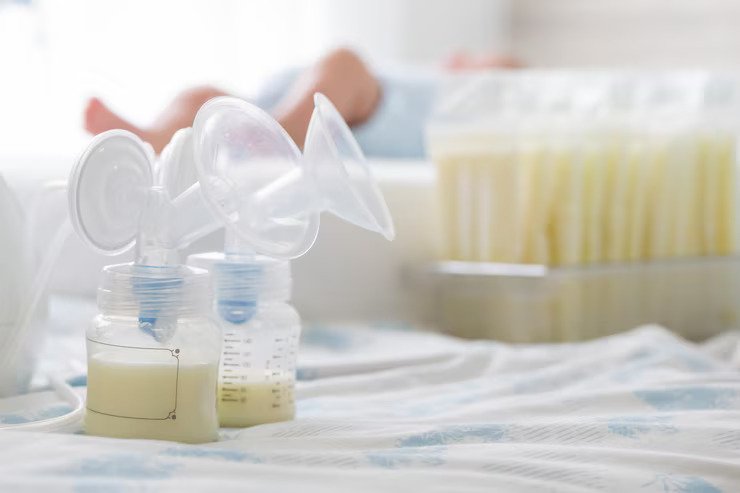
For mothers who are returning to work, the desire to continue breastfeeding the little one is certainly a unique challenge. In addition to trying to manage time for pumping breast milk, there are other important things that must be paid attention to in detail, namely how to store and warm breast milk. Now, to maintain the quality of expressed breast milk, the following is a summary of the correct way to store and warm breast milk. Pay close attention!
How to Store Breast Milk

The process of storing expressed breast milk must be done correctly so that its quality is maintained and the nutrients in the breast milk are not lost. So, Mother, please pay attention to the following tips!
1. Use a Food-Grade Container
The first thing that must be considered in storing breast milk is the choice of container. Make sure to use a container/storage labeled food grade to maintain the quality of the expressed breast milk.
The storage material can be made of glass, plastic, or plastic bags that are BPA-free and of food grade quality. Along with the times, there are now also ASIP storage products made of PPSU material which are lightweight, heat resistant, BPA free, and FDA certified.
In addition, it is better to use ASIP storage containers that have a volume for one feeding, for example, 60 ml or 120 ml.
2. Breast Milk Storage Containers Must Be Sterile
In addition to choosing materials that are already labeled food grade, ensure that the storage used is completely sterile. This is important to prevent the growth of germs and bacteria in breast milk. This is because babies are more susceptible to illness because their immune systems are not yet optimal.
No need to worry because the process of sterilizing breast milk containers is quite easy. Simply clean the storage with warm water mixed with special cleaning soap or boil the container in boiling water for 5 to 10 minutes.
3. Label the ASIP Container
On each ASIP container, attach a label that includes the date information to make it easier to remember the storage time. Later, Mother can choose the ASIP that was stored first to give to the little one.
4. Store ASIP in the Freezer Immediately
After pumping breast milk, Mother should store it in the freezer immediately. However, if the pumping process is done while at work, you can store it in a cooler box first.
Avoid filling the container to the brim because breast milk tends to expand when frozen.
5. Pay Attention to ASIP Storage Time
Besides the four things above, the last thing Mother must pay attention to is the guidelines for the duration of storing expressed breast milk. Because every storage place has a different duration. Detailed explanation can be seen as follows.
- Room temperature : 4 - 6 hours
- Cooler box : 24 hours
- Bottom/back of the refrigerator : 3 - 4 days
- Freezer : 6 - 12 months
Read also: Relax Mother, Here Are 4 Ways to Get Breast Milk Flowing Quickly After Giving Birth
Steps for Warming Breast Milk

After understanding how to store it, next Mother must know the right steps in warming breast milk. Here is a brief review.
- Pay attention to the label on the breast milk container and choose the one stored first.
- Thaw frozen ASIP by moving it from the freezer to the bottom part of the refrigerator overnight.
- If the breast milk is stored in the bottom/back of the refrigerator, Mother can take it out for a while and give it to the little one while it is cold.
- Avoid warming ASIP directly on the stove, but soak it in a container containing warm/lukewarm water.
- Avoid using a microwave when wanting to warm breast milk because it can damage the important nutrients in it.
- Immediately give the ASIP to the little one within 2 hours after warming it.
- If it is not finished, Mother must not freeze it back into the refrigerator/freezer. So, it is better to discard the remaining ASIP that was not finished by the baby.
Read also: 4 Tips for Providing Exclusive Breastfeeding, Its Benefits & Nutrition
Make sure Mother only chooses the best ASIP container from Hegen whose quality is guaranteed. Interestingly, the ASIP storage can also be used as a baby bottle so it is more practical and hygienic. Not only that, all products from Hegen also use PPSU plastic material which is lightweight, durable, safer, heat and cold resistant, and also easy to clean.
PPSU (Polyphenylsulfone) is an FDA-standard material that combines the advantages of glass and plastic with a lightweight weight. In fact, PPSU is also BPA-free and has high-temperature resistance ranging from -20°C to 180°C. In addition to using PPSU material, Hegen baby bottles are also anti-colic and use the internationally patented PCTO™ innovation.
Hegen baby bottles consist of 4 sizes, namely 60 ml for newborns, 150 ml for 1-3 months, 240 ml for 3-6 months, and 330 ml for 6-9 months. Interestingly, these baby bottles of various sizes can also be attached to breast pumps! Click here to shop online and find all Mother's needs in just one click!
Reference:
- CDC. Proper Storage and Preparation of Breast Milk. https://www.cdc.gov/breastfeeding/recommendations/handling_breastmilk.htm
- IDAI. Penyimpanan ASI Perah. https://www.idai.or.id/artikel/klinik/asi/penyimpanan-asi-perah


